
YOU are here to improve your trumpet playing.
Cool because since 1995 trumpet players from all around the world have been learning to play trumpet better by using my trumpet books.
YOU want a trumpet teacher that is respected by other trumpet teachers.
I have been featured in articles in The International Trumpet Guild Journal, Wind Player Magazine and Overture an American Federation of Musicians publication. I have been mentioned in over a dozen books written by other trumpet teachers, in clinics, dissertations, forums, magazines, web sites and even youtube videos posted by other teachers. I have testimonials from ITG Officers, College Trumpet Professors, Authors of Trumpet Books and Pro Players.
YOU want to be a successful trumpet player.
There are over 100 testimonials from other trumpet teachers and playing trumpet pros on my testimonial page, because my trumpet books and trumpet lessons work. I have helped thousands of trumpet players and have also helped people to become full time professional trumpet players.
Tension-Less Playing. New book that teaches you HOW to relax and stop fighting your face and your trumpet so that you can double your endurance.
I have several packages, plus any of my books and videos can be bought individually.
I have books on trumpet embouchure, trumpet practice books for building trumpet range and long term practice routines that jolt you toward progress.
or personal Skype trumpet lessons.
I answer Trumpet questions on my Facebook page at: Facebook Trumpet Lessons.
BbTrumpet News: An Online Trumpet Magazine. Always free to advertise and read.
Free Trumpet Ezine.
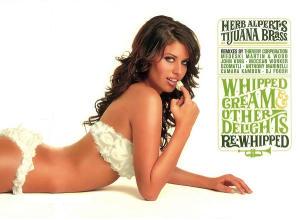 I met "POPS" on the Internet and he helped me through some frustrating problems that I was struggling with on the horn.......
Thanks Pops..................
Herb Alpert
It was a pleasure to work with you Herb and I LOVE the Remix CD Whipped Cream and Other Delights: Re-Whippedthat you recorded during our relationship. Congratulations on the CD making it to #5 on the Billboard Contemporary Jazz chart. You continue to be an inspiration to all brass players.
Pops
Pops,
I'm so glad I got your books -
some great stuff in there for every trumpet player!!!
Keep up the great work!!!
Kiku Collins
Check out Pop's trumpet books.
This guy knows what he is talking about and can write it!!!!
Jim Manley
Pops,
You have single-handedly given me the confidence and the ability to meet - EXCEED my wildest dreams. When I first came to you I never would have believed I would tour with Maynard Ferguson!!!
Thanks
Keith Fiala
"Clint McLaughlin is one of the leading experts on embouchure. His books discuss many of the embouchures used by leading trumpet players. I consider his publications excellent resources!"
David Hickman Author of the new book "Trumpet Pedagogy".
David Hickman is a Regents' Professor of trumpet at Arizona State University, recording artist, author, past President of the International Trumpet Guild, founder of Summit Brass and as a trumpet virtuoso has appeared with over 400 orchestras around the world.
http://music.asu.edu/ http://www.hickmanmusiceditions.com/
I am pleased and honored to have my trumpet books, ideas and teaching mentioned and quoted and to have this site listed in the TOP 10 Trumpet sites in these books:
"Tongue Level & Air"
by Eric Bolvin
"Sound the Trumpet: How to Blow Your Own Horn"
by Jonathan Harnum
"Trumpet Pedagogy"
by David Hickman
"Embouchure Enhancement" books
by Roddy Lewis
"Trumpeting by Nature: An Efficient Guide to Optimal Trumpet Performance"
by Jeanne Pocius
as well as in the International Trumpet Guild Journal, Overture, Windplayer many dissertations and even several Utube teaching videos done by other teachers.
I have had articles written for one of my trumpet books and testimonials from:
28 Authors of over 94 trumpet books;
61 college trumpet professors and noted trumpet teachers;
58 pro players who have recorded over 4,000 movie, TV and cartoon soundtracks;
9 trumpet embouchure clinicians;
3 Trumpet Guild presidents;
12 Trumpet Guild board members past and present;
8 mouthpiece and trumpet designersand makers.
The Conch Trumpet was invented when a fisherman blew a sea animal out of a shell and it made a noise. It was mostly a voice distorter. They shouted into it. Shell trumpets are still used today. On Madagascar they are used for religious services. In France they are blown on Easter Sunday.
Hollow log trumpets date back to 2000 B.C., some are hollowed out by hand while others are made from branches or trunks which were eaten by ants.
Along the Amazon they make a conical trumpet out of rolled bark. It is 12-20 feet long.
The Aborigines of Australia play the Didgeridoo made from branches 4 or 5 feet long. The player blows and mumbles at the same time. This can produce thousands of different sounds.
The Shofar, made from a ram horn and the Hatzotzeroth, made of metal, are both mentioned in the Bible. They were used to blow down the walls of Jericho. They are still used on certain religious days.
The Roman Cornu, originally made of horns and later metal, was made in several sections and about 10 feet long. Two were found in Pompeii.
The trumpets of Asia were made from bamboo, bones, or metal. In Tibet it was made from a human femur covered in human skin and ending in a copper bell.
The Pungacuqua was made by the natives of Mexico out of clay.
The tomb of King Tut had two metal trumpets in it. They were 23 inches long.
The Lur, a bronze 8 foot long "S" shaped horn, dates back to 1000 B.C. It could play up to the 12th partial.
The Salpinx was a straight trumpet 62 inches long, made of bone or bronze. Salpinx contests were a part of the original Olympic Games.
The Alphorn is still used today. You've seen them on television in a cough medicine commercial. They are "J" shaped, made in two sections, and 5-13 feet long. Alphorns can play from the 2nd to the 16th partial, and are used for signaling as well as a call for prayer in the Catholic Church.
The wooden Cornetto had six finger holes and was chromatic for one full octave.
The Serpent (a large Cornetto) also had six finger holes, but because of its larger size, it had a chromatic range of two and one-half octaves.
The Natural Trumpet or Baroque Trumpet was the most popular trumpet during the Baroque period. It was a long, cylindrical tube built in a loop which flared out into a bell that was four to four and one-half inches across.
The Natural Trumpet in "F" was six feet long and had slides and crooks, or extensions to change the key to E, Eb, D & C. The keys of B, Bb, A & Ab could be played by combining crooks. The D trumpet was the most popular. It was seven feet long. The range of the Natural Trumpet in "D" was from D° to a3, which is its 24th partial. No one player could play the entire range of the trumpet. The range was divided into four parts; Clarino, Second Clarino, Tromba & Principal. Each range required a different mouthpiece, as well as a different trumpet. The Clarino player used a trumpet which had a very small bore, or inside diameter. He played a very, very shallow cup shaped mouthpiece with a wide rim. As the range lowered, the players used larger and deeper mouthpieces. The Principal Players used trumpets with a very large bore size and deep mouthpieces. The Natural Trumpet was not chromatic and could only play the notes in its own harmonic series. That is why the crooks were so important. They were twice as long as modern trumpets in the same key. That made it easier to play the same partial. It also made the horn mellower than our modern version.
In 1787 William Shaw invented the vented trumpet. It had four vents which allowed one key change without using crooks. Now only three crooks were necessary.
In 1801, Anton Weidinger and Joseph Riedl invented the keyed trumpet. In 1810, Joseph Halliday made the first Kent Keyed Bugle.
Heinrich Stolzel and Friedrich Blubmel invented a two valve trumpet in 1818. The valves were square boxes made of copper. In 1824 John Shaw added springs to those valves and C. A. Miller added a third valve.
The 1820's were very important. The Flugelhorn was invented in Vienna and the three valve cornet as well. Adolphe Sax invented ten different Sax horns in 1843. Each one had either three or four valves. Wagner invented the Bass Trumpet for the "Ring of the Nibelung".
The modern trumpet in Bb is pitched a sixth above the Natural Trumpet in D. It has three valves which, when depressed, changes the key of the horn by making air go through additional tubing. The modern cornet is mellower, warmer and more agile than the trumpet because of the use of more conical than cylindrical tubing.

What trumpet embouchure is good for this type of playing?....
Some players do much better with a pucker than a rolled in embouchure.
It depends on how much corner tension, mouthpiece pressure and compression you use.
People who play more open aperture settings normally fall into 2 main groups; those who use a great deal of facial tension and those who use a lot of mouthpiece pressure.
Tension makes it almost impossible to use a rolled in setting well. Some players simply can't learn to relax enough to get a good sound. So for those people either a buzzing embouchure or the pucker makes more sense.
But those who don't use tension but use pressure can switch to a rolled in setting faster and with fewer problems.
Many people confuse the issue because they think and act like we are all starting at the same place and with the same physical makeup, same kind and amount of muscle memory.....
A lot of things that are said are true of some trumpet players but not all.
The "universal" truths are more universal with complete beginners than with people who have 2+ years of playing (including comeback players).
Things that work amazingly easy for people who NEVER played can be impossible for people who played and worked for years building opposite habits and muscles that are counterproduction to embouchures that make a lot of compression.
This why one person will swear by xyz embouchure system and another will swear at it. And neither can see or believe what the other means.
This is why forum discussions are so varied. Some answers are from people who never taught and so their total experience with embouchure changes is limited to 1. (It may be a good experience or it may be a bad one but they don't really know why.) A teacher who has done countless embouchure changes can see the pros and cons.
The norm is that all embouchure changes are messy. You can't count on YOURS being the easy one. (I write this because I often get emails like this.) I have a college tryout in 2 weeks and I need 5 more notes of range. What embouchure should I switch to.
They really think that in 2 weeks with the right choice they are going to be ready.
They best thing they can do in a 2 week time period (Or even a 4 month time period) is to learn proper tongue arch and breath support.
Tongue Hiss & Archtalks about this.
Why the Trumpet College website?
In 1995 I started a website which was finally changed to BbTrumpet.com in 1998. I ran through several different banners for that site and finally came up with Trumpet College.
By then I was getting fair saerch engine placement and I didn't want to change names. However; I started seeing people write about me on forums but they only remembered the Trumpet College. Their links were dead. So I registered this domain for the people that got confused by my banner having 1 name but my website another.
My banner was catchier than my name. LOL
'Pops' (Clint McLaughlin)
Copyright protected from 1995 to date.